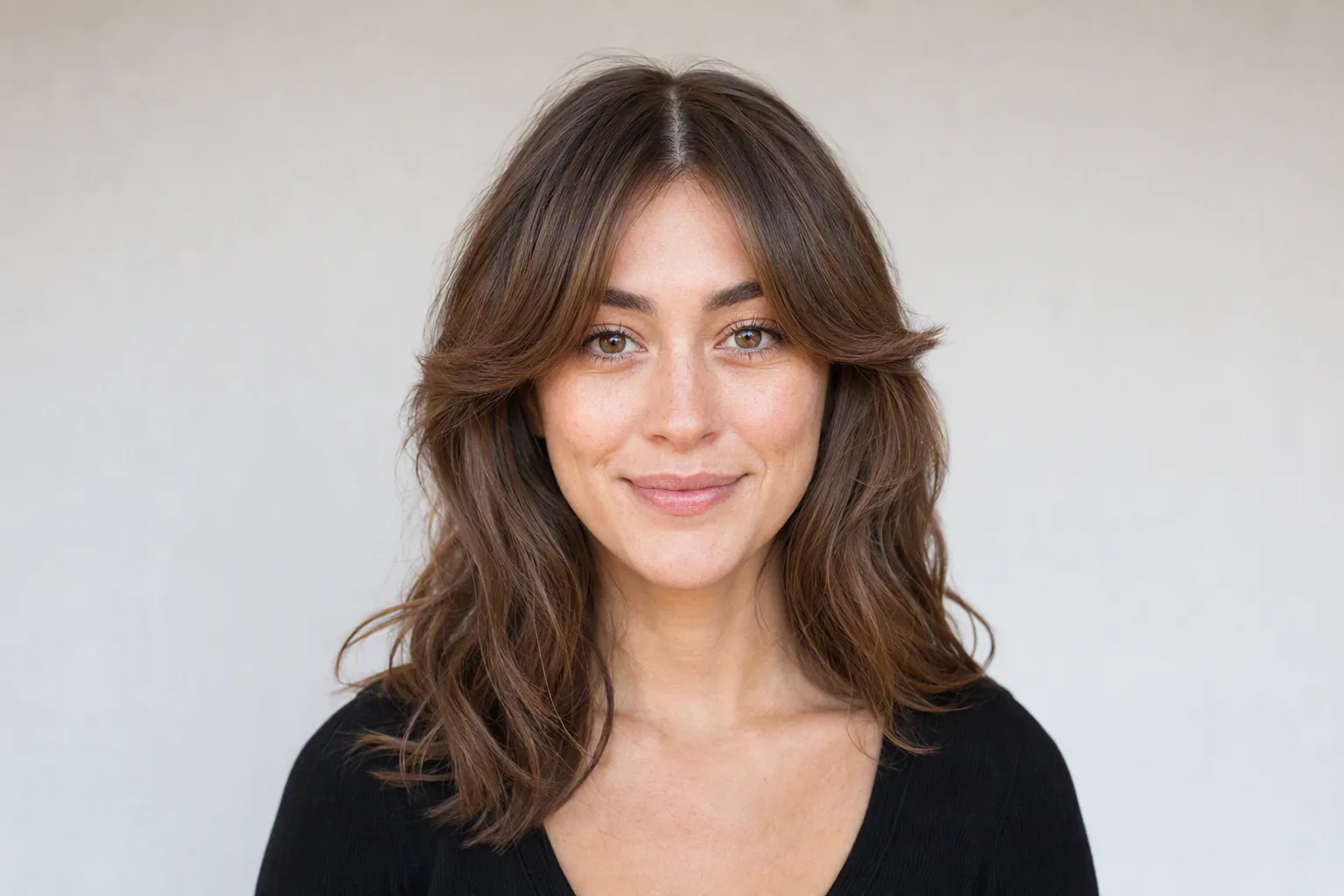
If you have ever considered bangs but hesitated because of the commitment, curtain bangs are the answer. Unlike blunt, straight-across fringes that require precision trimming every few weeks, curtain bangs are designed to blend seamlessly into the rest of your hair. They frame the face, add softness to strong features, and transition gracefully as they grow - which means even the "growing out" phase looks intentional.
First popularized by Brigitte Bardot in the 1960s and revived consistently in every decade since, curtain bangs have become the default recommendation for clients who want a fringe without drama. Here is everything you need to know before getting them.
What Are Curtain Bangs?
Curtain bangs are a type of fringe that is parted in the center (or slightly off-center) and swept to each side of the face, framing the forehead and cheekbones. The shortest pieces typically sit at the bridge of the nose or eyebrow level, and they gradually get longer toward the temples, blending into the rest of the hair.
The result looks like a pair of curtains opening around the face - hence the name. The soft, graduated shape means they never look heavy or blunt. They add dimension and movement to any haircut, from a bob to waist-length layers.
Which Face Shapes Do Curtain Bangs Suit?
Curtain bangs are genuinely one of the few styles that flatter every face shape. However, the way they flatter varies, so it pays to know your face shape before you choose a length:
- Round faces: The center part and vertical lines create length and slim the face. Keep bangs slightly longer - at or below the cheekbones - for maximum elongation. Curtain bangs for round faces work precisely because they break up the width without adding horizontal volume.
- Oval faces: Almost any curtain bang length works. This face shape's balanced proportions mean you can go shorter (eyebrow-grazing) or longer (cheekbone-length) without concern.
- Square faces: The soft, sweeping shape counteracts a strong jawline and angular forehead. Wispy, textured curtain bangs are particularly effective.
- Heart faces: Curtain bangs visually narrow a wide forehead by covering its widest points. They draw attention to the eyes and cheekbones instead.
- Oblong faces: The horizontal coverage across the forehead shortens the face's perceived length. Go for slightly fuller curtain bangs that cover more forehead real estate.
How to Ask Your Stylist for Curtain Bangs
The term "curtain bangs" is widely understood, but being specific about length and density helps avoid miscommunication. Here is what to communicate:
- Starting length: Tell your stylist where you want the shortest pieces to fall - eyebrow, bridge of the nose, or below. When in doubt, start longer. You can always go shorter at the next trim.
- Density: Curtain bangs can be wispy (fewer hairs, more see-through) or full (more hair, denser coverage). Wispy suits fine hair and softer looks. Full suits thick hair and more dramatic framing.
- Blend point: Specify where you want the bangs to blend into your layers - at the jawline, below the ear, or at the collarbone. This affects how seamlessly they integrate with your overall cut.
- Reference photos: Bring two or three images that show the exact effect you want. Even better, use Visio to generate a preview on your own face and show that to your stylist.
How to Style Curtain Bangs
The best part about curtain bangs is that they look good with minimal effort. But if you want that polished, intentional swoop, here are three reliable methods:
Method 1: Round brush blow-dry
This is the classic approach and produces the most consistent results. While hair is damp, section your bangs from the rest of your hair. Wrap the bangs around a medium round brush, pulling them forward and then directing the brush (and the blow dryer's airflow) outward and away from your face. The heat sets the curve. Alternate sides until both halves swoop symmetrically. This takes about two to three minutes.
Method 2: Flat iron curve
On dry hair, clamp a flat iron at the root of one side of your bangs. Slowly slide the iron down while rotating it away from your face in a gentle C-curve motion. Repeat on the other side. This method is faster than blow-drying and gives a sleeker, more polished result. It works especially well for straightening any kinks before setting the outward sweep.
Method 3: Air-dry with a clip
If you prefer a no-heat approach, apply a lightweight mousse or texturizing spray to damp bangs, part them in the center, and clip each side back at a 45-degree angle away from your face. Let them dry completely, then remove the clips. The result is a relaxed, soft frame that looks effortless. This method works best on naturally wavy or curly hair.
Pairing Curtain Bangs with Different Haircuts
Curtain bangs are incredibly adaptable. Here are some of the most popular combinations:
- Bob with curtain bangs: A chin-length or jaw-length bob with curtain bangs is modern and structured. The bangs add softness to the bob's clean lines.
- Lob with curtain bangs: The lob's collarbone length plus face-framing bangs creates one of the most universally flattering combinations in hairdressing. Low maintenance, high impact.
- Long layers with curtain bangs: For those who want to keep their length, curtain bangs add visual interest and frame the face without requiring a major cut.
- Blunt cut with curtain bangs: The contrast between a blunt, one-length cut and the soft, sweeping bangs creates a striking, fashion-forward look.
Maintenance Schedule
Curtain bangs grow out more gracefully than any other fringe style, but they still need regular attention:
- Weeks 1–3: Your bangs will look exactly as intended. Minimal styling needed.
- Weeks 4–6: The shortest pieces start reaching your nose. This is the ideal time for a trim to reset the shape.
- Weeks 6–8: If you skip the trim, the bangs start looking more like face-framing layers than intentional bangs. Some people prefer this transitional look.
- Beyond 8 weeks: You are officially in grow-out territory. At this point, the bangs blend into your hair and the fringe effect disappears.
Growing Out Curtain Bangs
One of the greatest advantages of curtain bangs is the grow-out process. Unlike blunt bangs - which go through an awkward, eye-poking phase - curtain bangs simply get longer and gradually become face-framing layers. Most people cannot pinpoint the moment curtain bangs stop being "bangs" and start being "layers." That seamless transition is by design.
During the grow-out, you can speed the blending by asking your stylist to point-cut the ends for texture and to slightly angle the longest pieces into your existing layers. Using clips or small barrettes to pin the sides back is also a stylish way to manage the in-between length.
Preview Curtain Bangs on Your Face
Still unsure whether curtain bangs will suit you? Upload a selfie to Visio and see them on your face in seconds. You can compare different bang lengths, test them with a bob or a lob, and share the results with your stylist for a reference that is far more useful than a celebrity photo.
See Curtain Bangs on Your Face
Download Visio and preview curtain bangs on your selfie - start your free trial today.


Frequently Asked Questions
Do curtain bangs work on round faces?
Yes, curtain bangs are one of the best bang styles for round faces. The center part and face-framing layers create vertical lines that elongate the face. Keep them slightly longer - cheekbone length or below - to maximize the slimming effect. Avoid cutting them too short, which can emphasize width.
How do I style curtain bangs at home?
The easiest method is blow-drying with a round brush. Section the bangs, wrap them around the brush, and direct air away from your face to create the signature swoop. Alternatively, use a flat iron: clamp the bangs near the root and curve the iron outward as you slide down. Finish with a light-hold hairspray to keep the shape without stiffness.
How often should curtain bangs be trimmed?
Every 4 to 6 weeks is ideal. Curtain bangs are more forgiving than blunt bangs because they're designed to blend into the rest of your hair, but once they grow past your cheekbones they start losing the framing effect and can look like overgrown layers rather than intentional bangs.
Can I try curtain bangs without cutting my hair?
Yes. AI hairstyle apps like Visio let you upload a selfie and preview curtain bangs on your own face instantly. This is the easiest way to see whether the style suits your face shape and features before making any commitment.